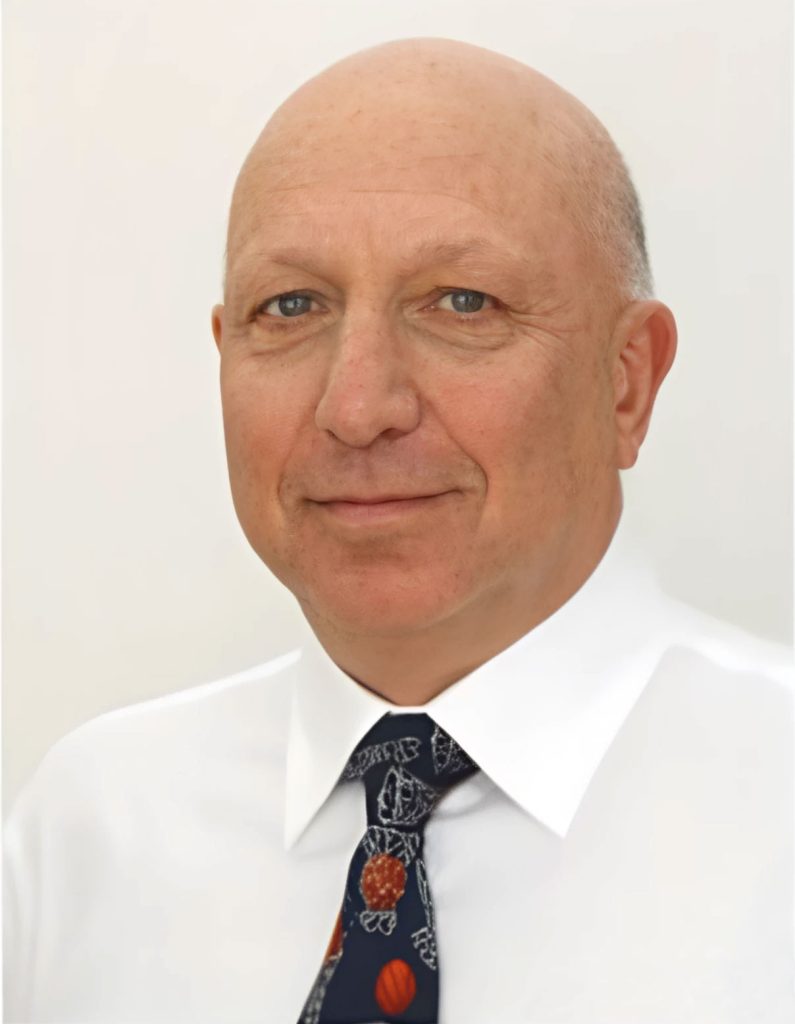
I’m especially excited to do this interview on public speaking anxiety disorder because it’s a very confusing subject, even given the fact that public speaking, it’s well known that it’s the number one anxiety in phobia in our land. So I’d like to introduce Kendra, thank you for coming to this interview, and could you share with the audience what you do? Absolutely, thanks for having me. I am an oncologist. I have from about a decade now specialized in treating patients with leukemia, and I now also have kind of switched jobs still with an oncology and leukemia focus, but doing clinical trial development. But as a faculty member at an a large cancer center and at a medical school, part of my a big part of my job has been giving talks, giving lectures, just speaking to anyone and everyone about leukemia, whether it’s patients, students, other faculty, community practice physicians, but public speaking has been a major part of my career since I started in really even since I started fellowship in 2010.
So what brought you to treatment? Honestly, it was in kind of this new, I would say new onset of public speaking anxiety that started probably eight years into my career. So it really kind of caught me off guard. I had been giving talks for many years and did fine, right? I felt okay with it. I knew I always had a little bit of anxiety associated with it, but it had started to get significantly worse. So probably back in 2022, maybe, I started to notice with bigger presentations, I would get very jittery, very short of breath, my heart would rates, I’d feel very restless.
And then I’d start to get nervous about the fact that I was appearing nervous and it just made things significantly worse. And interestingly, this is that kind of still during COVID when most of my speaking engagements were all on Zoom, they were all virtual, which I would have thought that that would kind of ease some of the anxiety because you can still kind of hide behind your computer screen, but that’s really when it started. And then I noticed that it started kind of progressing into even smaller speaking events to the point that if I was needing to give an update to the faculty in my hematology department, I was overseeing the clinical research at that point. And if we had a faculty meeting and I was asked by our chair to give an update, I would get incredibly nervous and would be jumping around in my office before I had to speak, just to try to get the jitters out, which didn’t work. And it just, it became debilitating to the point that I just, I didn’t want to speak even to the faculty members in my own department that I had been a member of for the last eight to nine years. And I would have considered all of them friends. So at that point, I knew I needed to do something because things were not getting better, they were getting significantly worse.
Thank you for sharing that. So where are you at now with this? I’m doing amazingly well, actually. Just in the last few months, I actually gave a lecture to a group of approximately 800 people in Europe without any problem, which I thought was a huge accomplishment. And to make that even more of an accomplishment, I was under the impression when I went over there to give that talk that I was going to be speaking to a group of maybe 50 people while they were eating lunch. So didn’t think it was going to be that big of a deal. And then when I got there, I walked into this enormous auditorium and realized that I was completely wrong about the audience I was speaking to. And it was fine. It was fine with that.
Previously would have just thrown me over the edge. I quite honestly probably wouldn’t have agreed to do it a couple of years prior. I would have found a way out of it. But in that case, it went extremely well. And of course, I had a little bit of jitters as I was walking up to the podium. But I think the success there was that I could move through that and allow that and not let it overcome me. And the whole thing went extremely well. So that’s just one example, but probably the biggest example in the last few months of where things have gotten so much better. I think another example is in my new job. I just, just on Monday of this week, had to give a presentation to basically the person right below the CEO and then the person right below that person, trying to get approval for a study that I’ve been working on. And that’s another one that would have really, I would have tried to get someone else to do that presentation a couple of years ago.
And this was the first time for me to even meet some of these people in this group. And it was fine. I didn’t have any reservations about doing it. I didn’t feel anxious and nervous during the talk. I, you know, I felt a little energized right before I started presenting. And then just kind of went with it. And the whole thing went great. The trial got approved. And so it’s, I’ve made huge strides. Am I correct that you used the word cure? Yes. I would. I mean, I was not being able to speak to my own faculty who are friends for nine years to speaking to a group of 800 people and I didn’t expect it. And I would call that cured. Yes. Okay. So cured is a, it’s a rare word. More common as people resolve the problem. So cure is rare and it’s very special. So could you just clinically define it for a moment?
Yeah. It’s, you know, as an oncologist, I don’t use the word cure hardly ever. Because it’s, like you said, it’s a, it’s a hard milestone to reach. In my mind, cure means the disease, the problem, the, the, whatever it is that you’re dealing with is completely gone and will not come back. So that would be how I would define cure versus resolved or remitting would be, you know, the symptoms are gone for the time being but will likely return at some point. And in my case, I would say I’m comfortable using the word cured with regard to public speaking anxiety because of the fact that I’m confident in my ability to manage the feeling of anxiety when it comes up. I feel like I kind of recognize where it comes from.
I recognize how it feels in my own body and I am able to, to let it go and let it pass. And, and I’ve learned how to do that so that the problems that come from public speaking anxiety are no longer present. Okay, so the audience now is going to want to know how you accomplish this. It took a long time. It took a lot of work. It took a lot of time. It took a lot of talking to things. It took a lot of reading. But essentially, I have come to learn that my emotions and in this case anxiety are all really driven by the thoughts that I’m thinking. And so when I get caught up in this negative thought loop, I guess you could call it, it just exacerbates the anxiety.
So I have, I can remember, you know, before giving a talk a few years back, like, I would, I would be nervous about the fact that I might get nervous. And so it was just this, this progressive cycle that just built on itself. But now I’ve realized that if I keep trying to, to fight the anxiety, right, if that energy is going to come up, that’s, that’s normal. If you’re going to talk in front of a group of people, it’s normal to get a little bit of, of energy flowing through you. But what I would do before was just try to fight it away, right? Jumping around my office telling myself, you need to calm down. It’s going to be fine. But really, it was, it was a lot more negative self-talk, trying to kind of beat myself out of it. But I’ve learned now that the more you try to fight it, that’s when the anxiety gets worse. So the more you resist against these negative emotions, you actually are making them stronger. And that’s really when the suffering happens, right? So if you can sit with that anxiety, sit with pain, sit with whatever that negative emotion is, identify it in your body, right? For me, I could, I would say, this feeling in my stomach is anxiety. And it’s okay, because it will pass. Or, you know, this, this feeling in my chest of my heart beating is anxiety. And that’s okay, because it will pass, right? Rather than like, oh my gosh, I have to get my heart rate to slow down. Well, you can’t get your heart rate to slow down by forcing yourself or beating yourself into it. So if I could just sit with the anxiety,
identify it in my body, and let it move through me, then the suffering that came with that was preventable. Okay, so do you remember that profound quote you shared in a session once? It was, I’m realizing, I think I have it right here, I’m realizing how my conscious thoughts drive my emotions and activities, rather than allow them to flow as if directed by something external. Yes, yes. So I think I used to think that my thoughts and then my emotions were just things that happened to me, right? Thoughts, I didn’t, I kind of, I think I had the impression that my thoughts were just facts, right? I was telling myself that these are the facts and and they just, all of this just happened to me. But I’ve come to realize that all of that is in my control, and my feelings are really generated by the thoughts that I’m thinking. And so if I can shift my thinking, not to just come up with something I don’t believe, just to sound positive, but if I can come up with a more favorable thought that is also believable to me, it completely changes the way that I feel, which then changes the actions that follow. So I found myself telling, before a talk, I would tell myself, you know, it’s fun to teach people things that I know, because I believe that, I do, I still believe that, right? It’s fun to educate people on things they want to know that I know. And that thought rather than, you’re going to appear nervous,
you’re going to look stupid in front of these people, someone may disagree with you, those thoughts were driving this really negative energy and then causing me to really fight against it and make it worse. And again, it was just this loop, but by shifting that thought to, again, it has to be believable. It can’t just be, you know, I can’t be going in there telling myself, I’m the most amazing speaker on the planet and nobody knows more about leukemia than me, because I don’t believe that. I think there’s lots of different speakers and lots of people know things about leukemia. But to tell myself, it’s fun to teach people about the things that I know, that was believable to me. And that helped me calm down because I was able to shift just the feelings that came from that thought were much more positive and much less anxiety for okay.
Okay, now to break it down just a little more. Okay, so we discuss once the ingredients for your healing. Okay, there were four basic domains here. So number one, correct me if I’m wrong, but number one, in terms of the priority for your healing, we put emotere. Now, this is just for the listeners, this is profound. Emotere is the Latin word for emotion. Literally, it means energy in motion. So emotions are biochemical energy. Okay, and that kind of is what I believe you, you put his number one. And then there was technique, which is surfing, you know, learning to control the adrenaline and brain health, common sense, sleep, nutrition, exercise. And there was another one, medicine. Okay, now, you, you used medicine the right way. All too often people come to me with this problem and they’ve been on medicine, they have no clue what they’re doing. They have a passive approach to it. They do not have a proactive strategy. You used medicine specifically with a high performance manner. Can you share what you did with that, please? Absolutely. I started on fluoxetine or Prozac. A few months after I started working with you, really, because, I mean, what it ended up doing was kind of, I would say, smoothing the rough edges.
That’s how I would describe it. It gave me a little bit more of an ability to take a pause before reacting and question what I was thinking. And is that really what I want to be thinking? Is that really what I believe? But it allowed me to just kind of bring down the intensity of of the negative emotions so that I could take a step back and question the rest of it. And in doing so, I think that gave me the ability to then learn the rest of this, learn the whole connection between my thoughts and my emotions and my actions and how all of this played out in my body and recognize, you know, what is anxiety? How does that feel? But without the medication, honestly, I don’t know if that same outcome would have occurred because I wasn’t really bringing down the intensity prior to it. But once I learned how to manage my mind and learned the rest of this, learned the connection between my mind and my body, I didn’t need the medication anymore. So I was able to stop it. I was on it for a little less than two years, maybe? Is that true? Yeah, probably a little less than two years.
When I set people up to use medicine, I try to train them for a metaphorical pregnancy, which is around nine months. Well, nine months can be a year and a half, whatever. Yeah, it may have been like a year and a half. And then as you were coming off the medicine, what were you experiencing? I mean, I tapered off it. So, you know, it was a… I didn’t have any problems. I felt… Actually, I don’t feel different off of it now than I did when I was on. I’ve been off for a number of months now. I think because I learned how to manage my mind. So I had the skills to manage my mind and kind of lower the intensity of the negative emotions on my own without needing the medication anymore. What was the role of journaling for you? I think journaling is… It’s an important practice because it just lets your brain flow. It’s just the things that you maybe don’t even want to say out loud. You can just put them down on paper or put them in the computer and type them right? Knowing very well that you can also just delete it or throw it away, but at least it’s out there. So I think that journaling kind of opens your mind to what’s really going on in your brain rather than just thinking about the things that you want to be thinking about.
And what happened with your migraines? Oh my goodness, that has been life-changing. I used to get migraines about six days a week that started… I mean I started getting migraines when I was seven years old, but they really got bad in my early 20s. Probably around the time that I started medical school, maybe a little before that. And then it just kind of became part of my daily routine was having a headache and taking something for it. And whether it was just Tylenol or Ibuprofen or then eventually I got on migraine specific medicines, but honestly like those drugs, they just kept increasing the dose because they’re still having migraines daily. And I did make some changes to my diet. As I was learning all of this, I was also starting to learn the connection between my emotions and my eating habits. And I realized that there were oftentimes that I was kind of buffering these uncomfortable emotions by eating sugar. And that was not a healthy way for me to be managing any of these negative emotions. And so as I learned to manage my emotions and just accept them and let them kind of flow through me, I wasn’t trying to buffer with sugar anymore. And so when I cut out the sugar, my migraines got significantly better.
I would say down to maybe two days a week, still on medication, but two days a week. And so that was really life-changing. And then more recently, I’ve also had a change in jobs where I have less stress coming from my day-to-day job. And I have more flexibility to spend a little time on myself doing what matters to me, being with the people who really matter to me. And since then, I have completely gotten off all of my migraine medicine. And I would say, I’m not going to say I’m cured of migraines, but I think the last time I had a migraine was probably six or seven weeks ago. And that I never thought would happen. I just thought I was a person who had headaches, and I was going to be that person for the rest of my life. But it’s not true. It’s absolutely not true.
So it’s been life-changing. The last question. Public speaking, anxiety disorder. Get clinical for a second here, right? Okay. It’s a subset of social anxiety. And people will do anything they can do to not treat this the right way. They’ll look for magic, they’ll look for medicine incorrectly. They’ll think that CBT can cure them in 10 sessions, which is incredibly pathological, excuse my language thinking. So it’s very complex. It’s very misunderstood. Yes. As a physician, you are in the unique position to educate people. So my last question is, what advice would you give to people who are suffering with this problem?
I would say that we need to recognize and appreciate the whole mind-body connection more than we do. And I say that as a physician in the medical community as well. I think it’s oftentimes very overlooked. Disease is a pathology that comes from, you know, that’s how we think of it anyways. A disease is a pathology that comes from some sort of biochemical change. And it requires, you know, medication or surgery or whatever else to fix the disease. But I honestly believe in many cases, including this, that by learning how to manage your mind and learning to recognize where those negative thoughts come from, why they are there and how you can address those, I think we can make a lot more headway. And I saw that with the public speaking anxiety, I saw that with migraines, I saw that with my eating habits that led to significant weight loss in a healthy way, right? Like just learning how to manage my mind appropriately, learning how to understand and respect the connection between my thoughts, my emotions, my actions allowed me to make the changes that were necessary and not be on medication lifelong. I would say, you know, I’m 46 years old, so being on a med for a year and a half is really an incredibly small part of
my entire life. So I mean, hardly on meds at all. And now I don’t feel like I need that. I feel like I’ve learned how to manage my mind the way the medications were helping me do in the beginning. But we need to appreciate that there is that connection because your body holds on to tension and stress and negativity, negative emotion in its own ways. And if we don’t learn how to let that go, it’s just going to keep getting worse, whether it’s chronic pain, whether it’s headaches, whether it’s anxiety, there’s so many different things, but so much of it is just related to our mind and the way that we think. Thank you for sharing. Absolutely.